OPSEC and privacy: OSINT write-ups
Protecting investigators, sources and subjects.
WhatsApp is private by design, but not opaque. What a phone number's profile, a business account, a group invite link and a public channel show to outsiders, how to check whether a chat screenshot is genuine, and the privacy and legal cautions that apply.
Every search leaves traces. How to decide what protection a piece of research needs, separate your identity from your work with profiles and virtual machines, choose between a VPN and Tor, run research accounts honestly, and avoid the leaks that tools and links cause.
How to research Discord with open sources. Turn on Developer Mode to copy permanent IDs, decode account and message creation times from them, read a server's details from an invite link without joining, and understand what joining a server exposes about you.
What the dark web is and is not, how to set up for onion research, where to find and verify onion addresses, the mistakes that link hidden sites to real infrastructure, clear-web alternatives that avoid the visit altogether, and the legal lines that must not be crossed.
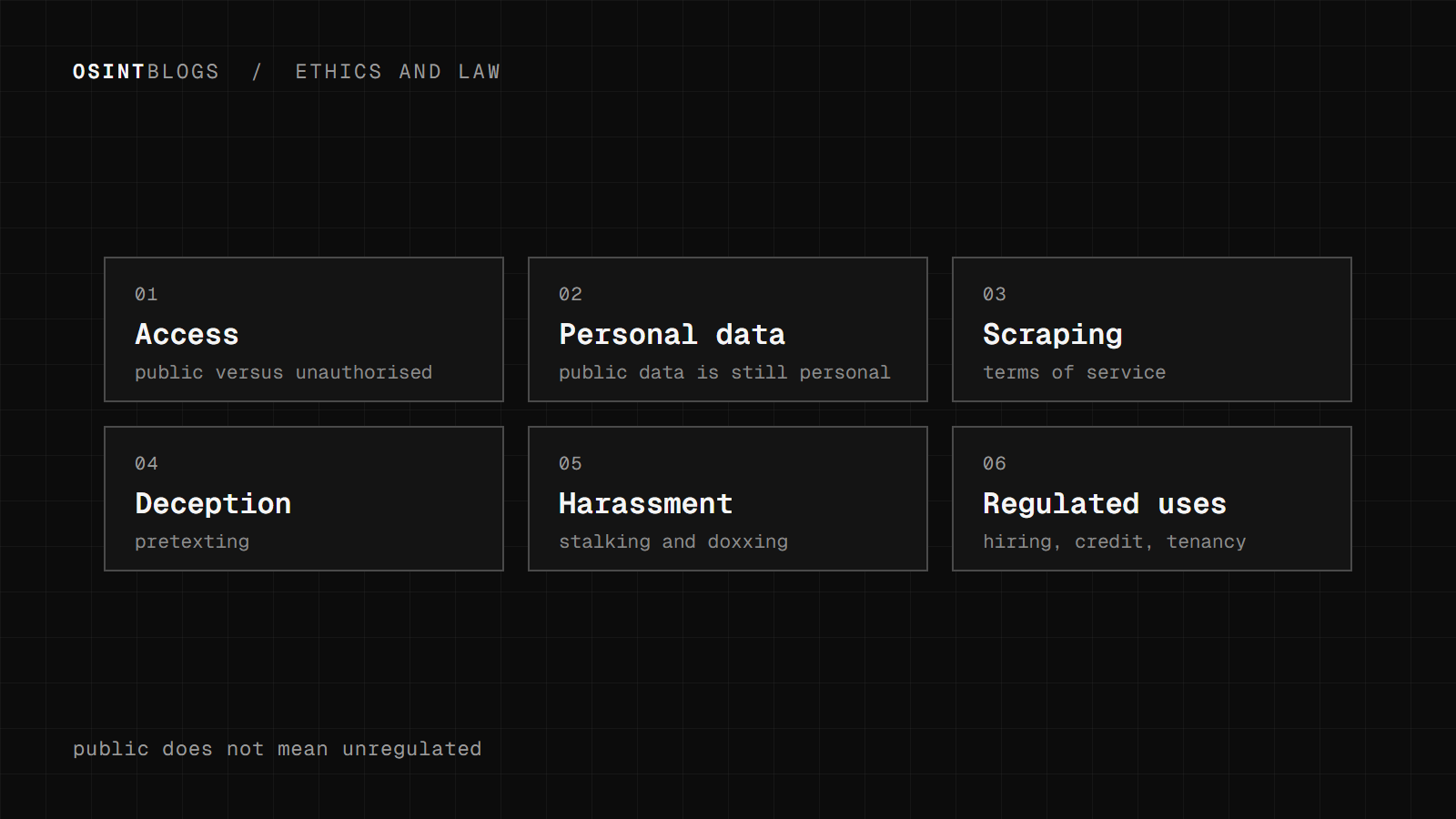
Collecting public information is generally lawful, but public does not mean unregulated. Where the legal lines sit for OSINT in the US, UK and EU: unauthorised access, data protection, scraping and terms of service, pretexting, harassment and regulated uses.
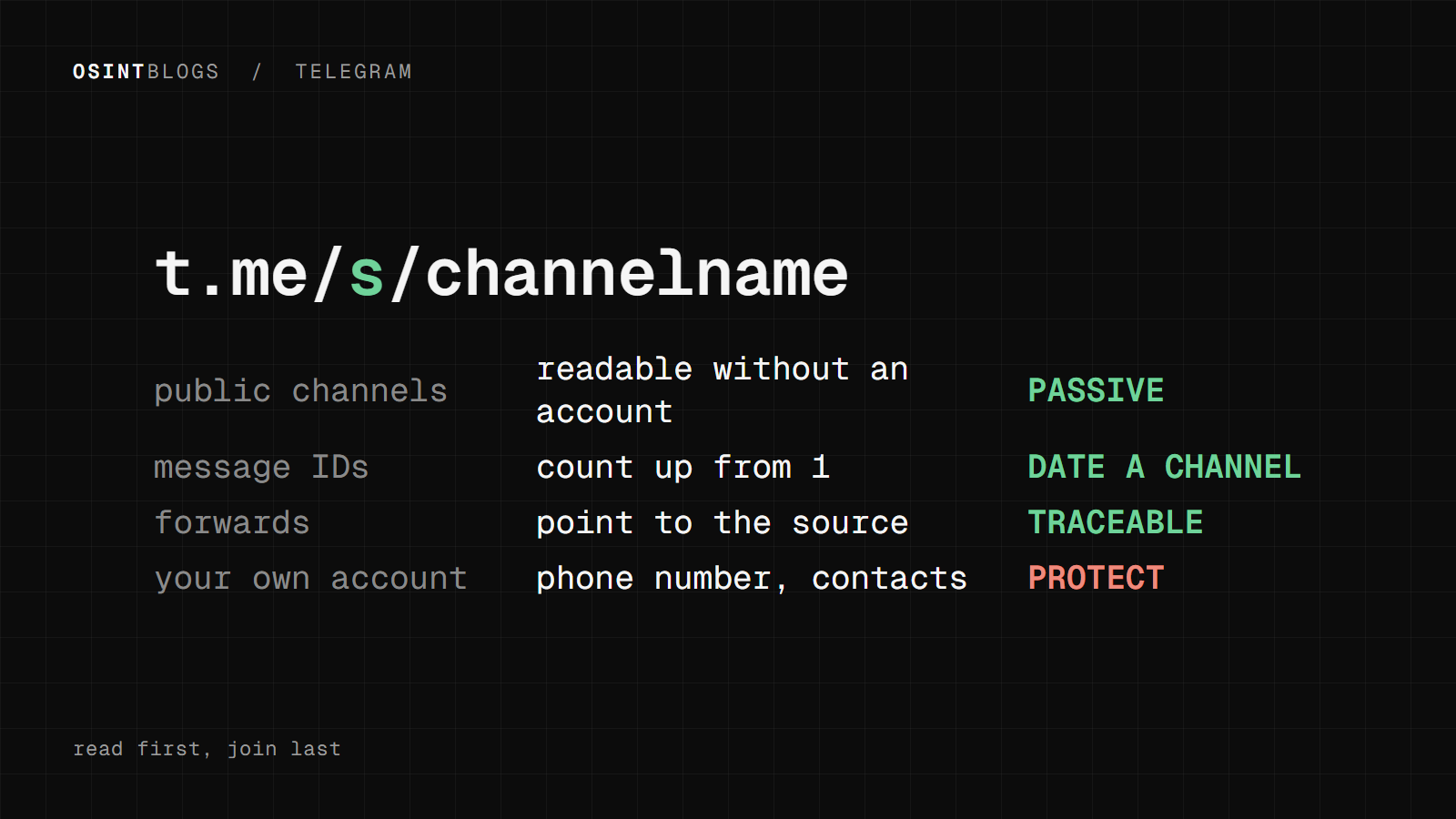
How to research Telegram with open sources. Read public channels without an account, use message IDs to find creation dates and deletions, follow forwards to the original source, export chats properly, and avoid exposing yourself or relying on leaked-data bots.
All topics